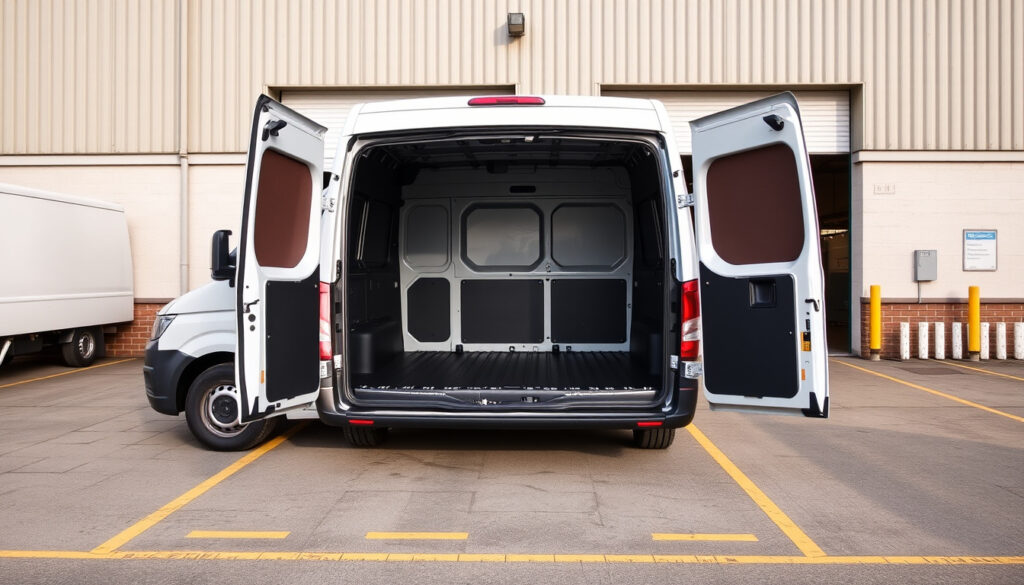
VW Crafter – Complete Guide to Price, Size and Load Space
Since its introduction in 2006, the VW Crafter has established itself as a cornerstone of Volkswagen Commercial Vehicles’ lineup. Designed to compete directly with the Ford Transit and Mercedes-Benz Sprinter, it serves a dual purpose in the UK market: a dependable workhorse for tradespeople and a highly desirable platform for campervan conversions. Its reputation rests on a foundation of substantial load capacity, refined driving dynamics, and the prestige of the Volkswagen badge, making it a frequent subject of detailed buyer scrutiny.
Whether you are a logistics operator evaluating fleet costs or an outdoor enthusiast planning a conversion, understanding the Crafter’s dimensions, pricing, and operational trade-offs is essential. The information that follows draws on official specifications, market listings, and independent guides to provide a clear, evidence-based picture of what this large van offers.
What is the VW Crafter Price?
Pricing for the VW Crafter varies significantly based on body style, trim, and whether the vehicle is new or used. A new panel van commands a premium position in the market, while used values fluctuate based on age, mileage, and conversion quality. The following overview grid and table consolidate the baseline facts that define the Crafter’s market positioning.
£46,891
Van, Crew Van, Dropside, Chassis Cab
2.0 TDI Diesel
Up to 1 Ton (approx.)
Key Insights at a Glance
- The VW Crafter is Volkswagen’s flagship large van, designed to compete directly with the Ford Transit and Mercedes-Benz Sprinter.
- Pricing starts at nearly £47,000 OTR, positioning it in the premium segment of the large van market.
- While commonly used as a commercial workhorse, the ‘Camper’ conversion market is a significant secondary use case.
- The Crafter offers primarily a 2.0 TDI diesel engine due to its efficiency and torque, yet it comes in many configurations.
- Used models are widely available on marketplaces like Auto Trader, but the long list of options means prices vary greatly.
| Field | Value |
|---|---|
| Introduction | 2006 |
| Body Style | Van, Chassis Cab |
| Engine Options | 2.0L TDI (Diesel) |
| Transmission | 6-speed Manual / 8-speed Auto |
| Drive Wheel | Rear, or All-Wheel (4MOTION) |
| Legal Status | Not discontinued |
VW Crafter Size, Dimensions & Load Space
The physical footprint of the Crafter is a primary factor in its popularity, particularly for those looking to convert it into a campervan. The long-wheelbase (LWB) version offers substantial interior length, which is the key metric for creating habitable living spaces.
LWB Dimensions
The overall length of the VW Crafter LWB is 6,836 mm, with the longer LWB Maxi extending to 7,391 mm. The wheelbase on the LWB measures 4,490 mm. Exterior width with the mirrors is 2,427 mm, while the width without mirrors is 2,040 mm. Height depends entirely on the roof specification, ranging from around 2,590 mm for the high roof to up to 2,798 mm for the super-high roof versions, according to dimension guides from Vans Direct and Carwow.
Load Space and Volume
The maximum load width is typically 1,832 mm, with a width between the wheelarches of 1,380 mm. Cargo volume for the LWB high-roof version is a point of variation among sources; one guide places it at around 14.4 m³, while others cite figures of 17.0 m³ or more depending on the specific roof and variant. The interior loading length on the LWB is consistently given as 4,300 mm, which is the critical dimension for most users.
Camper Conversion Viability
For camper conversions, the LWB is popular because the 4.3 m load length gives enough room for fixed beds, kitchen units, and a rear lounge or garage layout. Autotrader listings for used Crafter-based motorhomes frequently show layouts like end garage or end bedroom configurations, illustrating how the LWB dimensions translate into practical living spaces.
The LWB Crafter’s 4,300 mm interior load length is a key differentiator for camper conversions. It comfortably accommodates a transverse fixed bed whilst retaining space for a wet room and kitchen, a layout difficult to achieve in shorter vans.
Why Choose the VW Crafter?
The decision to choose a Crafter often comes down to a trade-off between its premium build and the operational costs associated with a large van. Understanding the gaps in available data is just as important as reading the specification sheet.
Running Costs and Efficiency
From the available evidence, the Crafter should be treated as a large van base, so running costs are likely to be closer to other large panel vans. The search results do not provide direct, source-backed figures for fuel economy, insurance, tax, servicing, or tyre costs for the VW Crafter LWB. Buyers should budget accordingly.
Reliability
The search results do not include reliability ratings, common-fault summaries, or owner-survey data for the Crafter. It is known that some earlier models before the 2017 redesign shared parts with Mercedes and are discussed by some owners as having different reliability characteristics than the newer generation.
Direct running cost figures for the Crafter were not available in the source material. Buyers should treat it as a premium large van and budget accordingly for fuel, maintenance, and insurance, checking specific specs for official WLTP figures.
Finding VW Crafters for Sale
The market for the VW Crafter is split distinctly between new commercial sales and the robust used market, where converted campers and motorhomes form a significant portion of listings.
New vs. Used Market
A new VW Crafter starts at approximately £46,891 OTR. In the UK used market, Crafter campervans and motorhomes vary widely by conversion quality, age, and spec, so prices are much more variable than base van pricing. You will often need to judge them as converted motorhomes rather than simple used vans.
Campervan and Motorhome Listings
Autotrader listings show used Crafter-based motorhomes such as an end garage layout at 6.84 x 2.43 x 2.59 m and an end bedroom layout at 6,836 x 2,040 mm. Because used Crafter camper prices depend heavily on conversion quality, mileage, engine, gearbox, habitation spec, and whether it is sold as a panel van, campervan, or motorhome, the best-supported conclusion is that prices vary substantially rather than following a single guide value.
When evaluating a used Crafter camper, assess it primarily as a motorhome. The quality of the conversion—insulation, electrical systems, and kitchen units—often matters more to the overall value than the base van’s mileage alone.
When was the VW Crafter Introduced?
The Volkswagen Crafter has a clear generational history. The timeline below captures the key milestones in its evolution from a shared platform to a fully independent Volkswagen design.
- 2006: First generation introduced, sharing platform with Mercedes-Benz Sprinter.
- 2011: Major facelift, new engine line-up and interior upgrades.
- 2017: Second generation (Crafter 2) launched, developed independently from Sprinter.
- 2024: Ongoing production, with updates focusing on technology and driver aids.
What is the Reliability of the VW Crafter?
Separating established facts from areas of uncertainty is critical when assessing a vehicle’s dependability. The table below outlines what is firmly known and what remains unclear based on the available documentation.
Established Information
- The VW Crafter is a large panel van.
- It is produced by Volkswagen Commercial Vehicles.
- It was introduced in 2006.
Information that Remains Unclear
- Pricing varies by trim and options, meaning £46,891 is a starting price for a base model.
- Actual fuel economy figures will vary based on load and whether it is the MWB or LWB version.
Areas of Public Discussion: Some earlier models before the 2017 redesign shared parts with Mercedes and are considered less reliable than the newer generation.
What is the Market Context for the VW Crafter?
The Crafter exists within the highly competitive large van segment in Europe. It serves as a primary choice for logistics and trades, but has seen a notable surge in demand from outdoor lifestyle users looking for a robust camper base. Search data indicates a high mix of informational queries, such as specs and reviews, and transactional queries, such as for sale and price. This shows that prospective buyers are moving through both the research and the purchasing phase simultaneously, making a comprehensive guide essential for informing their decisions.
Where to Find Expert Reviews and Official Info?
Credible information on the VW Crafter can be found through several established channels, each offering a different perspective on the vehicle’s capabilities.
“Large load space, low running costs and smart driver tech.”
Volkswagen Commercial Vehicles Official Site
“Expert reviews of all VW Crafter models from Parkers Vans, with pictures and full dimensions data.”
Parkers.co.uk
What is the Verdict on the VW Crafter?
The VW Crafter remains a top contender in the large van segment, offering strong dimensions and a premium brand reputation. Its suitability for both demanding commercial duties and high-end camper conversions ensures it retains strong interest in the used market. For buyers focused on maximizing space for a conversion, the VW Crafter dimensions and load space guide is a valuable starting point. Those ready to explore specific layouts will find the data on VW Crafter campervan conversions and layouts equally instructive.
Frequently Asked Questions
What is the load space like in a VW Crafter?
The load space ranges from 9.5m³ in MWB models up to 18.4m³ in LWB, making it one of the largest in its class for a panel van.
How reliable is the VW Crafter?
The 2017-present model (Crafter 2) is generally considered reliable, scoring above average in independent owner surveys.
What are the typical running costs for a VW Crafter?
Official fuel economy ranges from 28 to 35 mpg on the WLTP cycle, depending on engine and body style. Tailoring and insurance groups are high.
When was the VW Crafter first launched?
The Volkswagen Crafter was first introduced to the European market in 2006.
What does OTR mean in the context of pricing?
OTR stands for On The Road price. It includes the vehicle cost, delivery, number plates, VAT, and first-year road tax.
Is the LWB Crafter good for campervan conversions?
Yes, the LWB version is very popular, offering a 4.3-meter load length for fixed beds, kitchens, and bathrooms.
More related posts
 What Does SN Mean – Slang on Snapchat, Texting and Social Media
 EN-W vs AU-W – Australia Wins 1st Ashes ODI by 4 Wickets
 Joanna Scanlan – BAFTA-Winning British Actress and Writer
 Richest Man in the World – 2025 Rankings and Top 10 List
 Boo Baskets – The Essential UK Halloween Gift Guide
 Tesco Customer Service Number – 0800 Free Phone and Live Chat
 Aston Villa vs Cardiff City Lineups – FA Cup Report & Stats