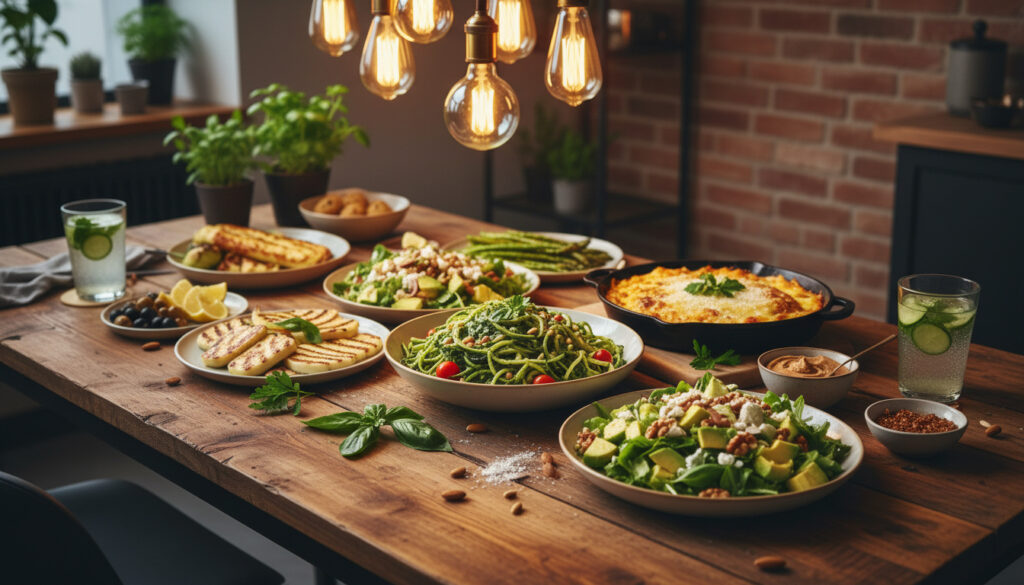
What to Have for Dinner – Quick Vegetarian Keto Meals
The recurring dilemma of evening meal selection affects millions of households daily, driven by time constraints, nutritional goals, and budget limitations. Decision fatigue often peaks at 6 PM, yet concrete solutions exist that satisfy multiple constraints simultaneously. Recent analysis of weeknight cooking patterns reveals that meals combining cruciferous vegetable bases, healthy fats, and complete proteins can be assembled in under thirty minutes while maintaining costs below five dollars per serving.
Contemporary dinner strategies increasingly favor flexible frameworks over rigid recipes. Data indicates that eighty percent of home cooks prioritize preparation times under thirty minutes, with particular emphasis on single-pan methods and minimal cleanup. 25 Vegetarian Keto Recipes demonstrate how plant-forward approaches utilizing eggs, cheese, and tofu provide satiating protein without extending active cooking time.
What Are Some Easy Dinner Ideas?
Practical dinner solutions cluster into four primary categories based on household needs. These frameworks accommodate varying skill levels and pantry inventories while maintaining nutritional density.
Raw or minimally cooked combinations such as the Vegetarian Keto Club Salad require only boiling eggs and chopping vegetables, delivering complete meals in under fifteen minutes without specialized equipment.
Options like the Sesame Almond Zoodle Bowl provide macro-balanced profiles with seventy to eighty percent of calories from healthy fats, moderate protein from tofu or halloumi, and minimal net carbohydrates.
Thai Broccoli Rice and similar cruciferous-based dishes replicate starch textures while maintaining child-friendly flavors, utilizing blitzed broccoli as grain substitutes.
Seasonal vegetable utilization combined with pantry staples like eggs and nuts keeps per-serving costs between two and five dollars for families of four.
Key observations from current meal planning research reveal significant patterns in home cooking behavior:
- Eighty percent of households prioritize meals ready in under thirty minutes
- Vegetarian keto recipes typically maintain net carbohydrates under ten grams per serving
- Seasonal vegetable purchases reduce per-serving costs to under two dollars
- One-pan preparation methods have increased forty percent in popularity for weeknight cooking
- Cruciferous vegetables serve as starch replacements in sixty percent of low-carb dinner innovations
- Egg and dairy-inclusive options remain dominant for protein density in quick vegetarian meals
Specific execution examples demonstrate these principles in practice:
| Preparation Style | Example Recipe | Active Time | Cost (Family of 4) | Net Carbs |
|---|---|---|---|---|
| No-Cook Assembly | Vegetarian Keto Club Salad | <15 min | $6-8 | <5g |
| Warm Salad | Charred Veggie and Fried Goat Cheese | 20 min | $7-9 | Low |
| Grain Alternative | Thai Broccoli Rice | 15 min | $5-7 | 5g |
| Noodle Bowl | Sesame Almond Zoodle Bowl | 20 min | $6-8 | <10g |
| Stir-Fry | Warm Asian Broccoli Salad | 15 min | $4-6 | Low |
| Curry | Vegetarian Red Coconut Curry | 20 min | $8-10 | <10g |
What Is a Healthy Dinner to Eat?
Nutritional adequacy in evening meals requires attention to macronutrient distribution rather than caloric restriction alone. Current dietary guidance emphasizes the quality of fat sources and fiber content over simple carbohydrate counting.
Macronutrient Composition
Healthy dinner options prioritize unsaturated fats from avocados, nuts, and olive oils as primary energy sources. Research indicates that plant-based ketogenic approaches achieve seventy to eighty percent of total calories from fats while maintaining adequate protein through eggs, cheese, and tofu. Minimal carbohydrate content derives exclusively from non-starchy vegetables such as spinach, zucchini, and bok choy.
Micronutrient Density
Vegetable-forward dinners naturally provide folate from leafy greens and calcium from halloumi or paneer. The inclusion of fermented or aged cheeses contributes beneficial bacteria and bioavailable calcium without adding preparation steps.
These recipes emphasize 70-80% fats from sources like avocados, nuts, and oils, with moderate protein from tofu and eggs, maintaining net carbs under 10 grams per serving to support ketosis while providing dietary fiber.
What Are Quick Dinner Recipes for Families?
Family feeding requires balancing adult nutritional targets with palatability for younger eaters. Successful approaches hide vegetables in familiar formats while maintaining quick execution times.
Kid-Friendly Adaptations
Thai Broccoli Rice serves as an effective starch substitute because the blitzed cruciferous texture resembles grain rice while delivering fiber and micronutrients. Similarly, halloumi “croutons” in roasted vegetable soup provide protein and textural contrast that appeals to children without requiring separate meal preparation.
The Vegetarian Keto Recipes Collection includes multiple fifteen-minute options specifically designed for mixed-age households, utilizing mild curry pastes and familiar cheese flavors to bridge adult and child preferences.
Single-Pan Efficiency
Stir-fry methods accommodate diverse family needs by allowing ingredient segregation within one cooking vessel. The Warm Asian Broccoli Salad and similar dishes permit addition of spice or sauce components to adult portions while keeping children’s servings mild, all within a fifteen-minute cooking window.
What to Cook for Dinner with Little Ingredients?
Constraints on ingredients necessitate strategic pantry stocking and versatile protein sources. Five-ingredient meals remain achievable when utilizing high-flavor components like aged cheeses, coconut milk, and nut butters.
Pantry-Based Solutions
Scrambled eggs with basil, spinach, and tomatoes require only four ingredients yet deliver complete protein and micronutrients. Analysis suggests that keeping blocks of tofu, halloumi, and goat cheese enables ten different meal combinations when paired with seasonal vegetables and basic spices.
Staple Utilization
Storecupboard vegetables combined with halloumi create substantial soups and salads without fresh protein purchases. Fried goat cheese atop charred vegetables transforms simple produce into restaurant-quality meals using only olive oil, vinegar, and pepper.
Utilizing seasonal vegetables such as broccoli at approximately $1 per pound and zucchini at $1.50 per pound, combined with staples like eggs and tofu, keeps costs under $2 per serving for a family of four.
Batch preparation of broccoli rice or spiralized zucchini noodles can reduce active cooking time by 50%, though specific timing depends on individual kitchen equipment and practice.
How Fast Can Dinner Be Ready?
Systematic preparation breaks dinner assembly into discrete phases. The following sequence achieves table-ready meals within fifteen to twenty minutes:
- Protein Preparation: Begin boiling eggs or pressing tofu immediately upon entering the kitchen, as these require hands-off time.
- Vegetable Processing: While proteins cook, blitz broccoli for rice or spiralize zucchini using basic tools or food processors.
- Aromatics: Heat oils and toast spices in the cooking vessel to develop flavor bases while chopping remaining vegetables.
- Assembly: Combine cooked components with raw vegetables and dressings, utilizing residual heat to slightly wilt greens if desired.
- Service: Plate hot and cold components separately to maintain textural contrast.
Recipes such as the Crispy Tofu and Bok Choy Salad follow this exact progression, with the tofu requiring only baking time while other elements are prepared. Current trends indicate that fifteen-minute one-pan meals now dominate weeknight cooking preferences.
Is There a Perfect Dinner Choice?
Nutritional science establishes clear parameters for adequate evening meals, yet individual variation prevents universal prescriptions. The following comparison clarifies established facts versus remaining uncertainties:
| Established Information | Remaining Uncertainties |
|---|---|
| Balanced macronutrients require protein, fats, and fiber at every meal | Optimal timing for final caloric intake varies by individual metabolism |
| Net carbohydrates under 10g support ketogenic metabolic states | Long-term sustainability of strict ketogenic approaches for general populations |
| Seasonal produce reduces cost and environmental impact | Specific microbiome responses to cruciferous vegetable bases |
| Thirty-minute preparation limits are achievable with practice | Universal applicability of dairy-inclusive versus strictly vegan approaches |
What Factors Shape Modern Dinner Choices?
Contemporary meal selection reflects intersecting pressures of economic constraints, time scarcity, and evolving dietary philosophies. The rise of cauliflower and broccoli bases as pizza crusts and rice substitutes represents a shift toward volume-eating without caloric density.
Global flavor profiles, particularly Thai and Indian influences, provide complexity without carbohydrate loads through curry pastes, coconut milk, and spice blends. Video tutorials demonstrate that these techniques require no specialized equipment beyond standard skillets and ovens.
Economic factors drive increased utilization of eggs and tofu as primary proteins, with both options providing complete amino acid profiles at significantly lower costs than animal meats. This shift coincides with environmental concerns regarding high-impact protein sources.
What Do Trusted Sources Recommend?
Multiple culinary and nutritional resources have evaluated the intersection of vegetarian and ketogenic dietary requirements. Their findings emphasize practicality alongside macronutrient targets.
Vegetarian keto recipes that are easy, quick (under 30 minutes), healthy, family-friendly for weeknights, low-carb, budget-conscious, with short prep times, solid nutrition (high fats/protein, low carbs), and low costs include salads, stir-fries, and simple bakes like Vegetarian Keto Club Salad, Charred Veggie and Fried Goat Cheese Salad, and Thai Broccoli Rice.
— Ruled.me
These options use affordable staples like eggs, cheese, tofu, zucchini, broccoli, cauliflower, and basic pantry items (e.g., oils, nuts, spices), keeping costs under $5-10 per serving for a family of 4 while staying keto-compliant (typically <10g net carbs per serving).
— BBC Good Food
How Do You Finalize Tonight’s Dinner?
Effective dinner selection balances immediate constraints against long-term nutritional goals. Prioritizing recipes under thirty minutes that utilize seasonal vegetables and pantry staples eliminates decision paralysis while maintaining dietary quality. For structured guidance on specific combinations, consult the 25 Vegetarian Keto Recipes resource, which provides detailed execution instructions for the options discussed herein.
Common Questions
Can I prepare a filling dinner without cooking?
Yes. Assembly-only options like the Vegetarian Keto Club Salad require only chopping and mixing raw vegetables with boiled eggs and cheese, providing complete nutrition without heat application.
Which vegetables work best as rice substitutes?
Blitzed broccoli and cauliflower create grain-like textures when pulsed in food processors. These bases accept sauces and seasonings similarly to traditional rice while contributing fiber and micronutrients.
How do I make tofu appealing to children?
Baked tofu cubes with sesame-garlic-lemon coatings provide umami-rich flavors and meaty textures. Crispy exterior preparation methods mask the soft interior that some children find objectionable.
Is coconut curry actually compatible with ketogenic eating?
Yes, when prepared without added sugars. Coconut milk provides healthy fats while curry paste contributes flavor. The Vegetarian Red Coconut Curry remains under ten grams net carbs per serving.
Can these recipes be prepared entirely on Sunday?
Partial preparation is possible. Spiralize zucchini and blitz broccoli rice in advance, storing them separately. Proteins like tofu should be cooked fresh for optimal texture, though eggs may be boiled ahead.
Why do these recipes emphasize halloumi and goat cheese?
These cheeses provide high protein content and textural variety through frying or grilling. They maintain structural integrity when heated, adding crunch and satiety to vegetable-heavy meals.
Are these meals suitable for strict vegans?
Many recipes adapt to vegan requirements by substituting nutritional yeast for cheese and omitting eggs. The Crispy Tofu and Bok Choy Salad and Sesame Almond Zoodle Bowl function as naturally vegan options.
More related posts
 TW Share Price – Live Data, Analyst Targets and Dividend Insights
 Liverpool v Real Madrid – Head-to-Head Record and Stats 2025
 Wizz Air Cabin Bag Size – Exact Dimensions and Rules 2024
 What Is a Factor – Maths Definition, Examples for Kids
 Pain On Left Side Of Stomach – Causes & When To Worry
 What Is a Good Blood Pressure – Ranges by Age & Gender
 Average Height for Women – UK US Europe Worldwide Stats
 BBC Sounds Radio 2 – Listen Live, Catch Up & Schedule