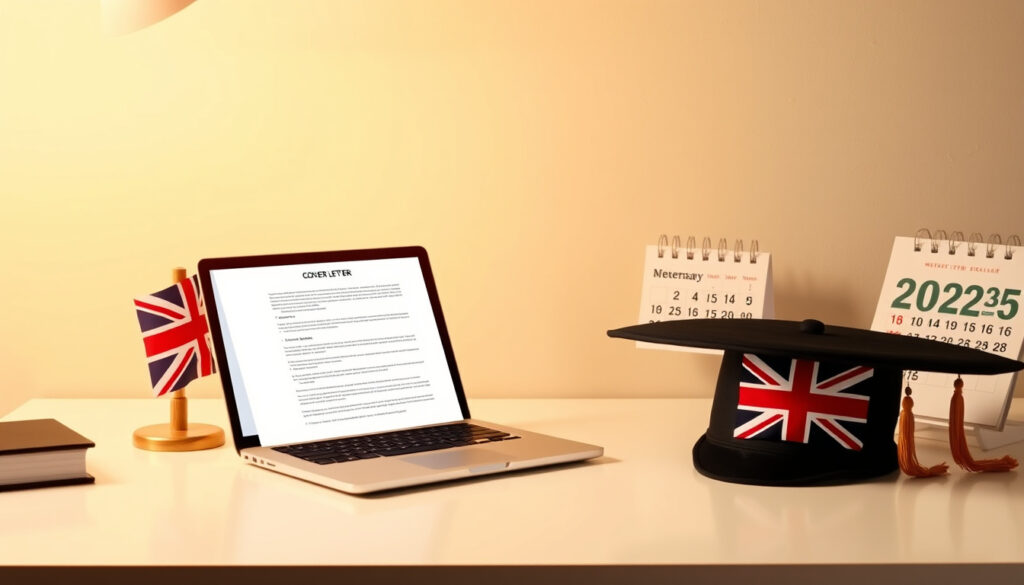
Cover Letter Examples UK 2025 – Short Graduate Templates
UK Cover Letter Examples 2025: Simple, Short & Graduate Templates
A strong UK cover letter in 2025 is typically a one‑page, concise business letter that complements—not repeats—your CV. For graduates or applicants with little experience, emphasis should fall on transferable skills, education, projects, internships and volunteering rather than a long employment history.
Whether you are applying for your first job after university or a mid‑career move, a well‑structured covering letter can make the difference between an interview and a rejection. The UK job market increasingly values direct, tailored communication, and search data shows high demand for simple, short examples and free PDF templates.
This guide brings together the most authoritative sources—including the UK National Careers Service, Oxford University Careers Service, and Prospects—to give you clear, actionable templates and writing tips for 2025.
What Is the Correct UK Cover Letter Structure and Format?
| Element | What It Looks Like |
|---|---|
| Format | Standard UK business letter format (addresses, salutation, date) |
| Length | Short, 3–5 paragraphs ideal for quick applications |
| Tone | Formal and professional for most industries; slightly less formal for creative roles |
| Structure | Introduction, body (2–3 paragraphs), conclusion, polite close |
The National Careers Service states that a cover letter is “a short letter, usually 3 to 5 paragraphs long.” It introduces you to an employer and asks them to consider your application. Every paragraph should serve a clear purpose.
- Short cover letters (3–5 paragraphs) are most effective for quick UK applications.
- A named salutation (“Dear Mr/Ms Smith”) is expected for a professional impression.
- Free PDF templates are highly searched for but poorly served by current search results.
- Left‑aligned text, a standard professional font, and generous white space improve readability.
- Match the style of your CV to create a consistent application pack.
- Save or send as PDF to preserve the layout.
| UK Cover Letter Quick Facts | Detail |
|---|---|
| Standard Length | 3–5 paragraphs |
| Salutation | “Dear [Name]” or “Dear Recruiter” |
| Closing | “Yours sincerely” (named) or “Yours faithfully” (anonymous) |
| Format | Business letter style |
| Page limit | One page |
| Font | Standard professional (e.g., Arial, Calibri) |
| Alignment | Left‑aligned |
| File type | PDF preferred |
Best Cover Letter Examples for the UK Job Market
Employers want to see why you want the role, why you fit it, and why the organisation appeals to you. The structure below is supported by Oxford Careers, UCF, Indeed, Zety, and other guidance.
Simple Short Cover Letter Formula
If you need a quick, effective template, use this four‑part formula:
- Paragraph 1 – role you’re applying for, where you found it, and a brief reason for interest.
- Paragraph 2 – 2–3 most relevant skills or achievements backed with evidence (projects, coursework, volunteering).
- Paragraph 3 – why the company appeals to you and your enthusiasm.
- Closing – thank the reader and politely request an interview or next steps.
Use the hiring manager’s name if possible. If you cannot find it, Oxford Careers advises “Dear Recruitment Manager” or “Dear Recruiter”. End with “Yours sincerely” when you use a name, and “Yours faithfully” when you do not.
Full Example: Short UK Graduate Cover Letter
Dear Hiring Manager,
I am writing to apply for the Graduate Marketing Assistant position at Brightside Media. I recently graduated with a First in Business Management from the University of Manchester and am particularly drawn to this role because of Brightside’s focus on data‑driven campaigns.
During my degree, I developed strong analytical and communication skills through a final‑year project on consumer behaviour, where I analysed survey data from 300 respondents and presented actionable recommendations. I also completed a marketing internship at a local start‑up, where I helped increase social‑media engagement by 40% over three months.
I am attracted to Brightside Media because of its reputation for innovative digital strategies, and I would welcome the opportunity to contribute as part of your team. Thank you for your consideration; I look forward to discussing my application further.
Kind regards,
Alex Chen
Microsoft Word offers free cover letter templates that can be edited online and saved as PDF. Canva provides free printable cover letter templates. Zety, Jofibo, and MyPerfectResume also offer template collections with PDF/DOCX download options.
Always tailor each letter to the specific employer and role. Avoid sending the same generic version everywhere. Research the company and mention why it appeals to you.
How to Write a Graduate Cover Letter in the UK
Graduate cover letters differ from standard ones because you may lack extensive work experience. The key is to highlight transferable skills from your degree, projects, internships, volunteering, and campus leadership. For a ready‑to‑use guide, see our graduate cover letter template.
What to Include When You Have Little Experience
- Relevant degree modules or coursework
- Final‑year projects or dissertations
- Internships or work placements
- Part‑time jobs that developed communication or teamwork
- Volunteering roles
- Society or campus leadership positions
- Skills such as research, analysis, organisation, and collaboration
Do not simply repeat your CV. Expand on the most relevant points and provide evidence for every claim. The Oxford Careers Service emphasises that you should “give evidence, not repetition”.
Graduate‑Focused Paragraph Strategy
In the middle paragraph(s), match your skills, achievements, and experience to the job description. Use 3–5 of your strongest attributes and back each one with a concrete example. Avoid starting every sentence with “I” to keep the writing varied and professional.
How Has the UK Cover Letter Evolved Over Time?
- Pre‑2000s – Long, formal, multi‑page letters were standard.
- 2010s – Shorter one‑page cover letters became common with the rise of email applications.
- 2020s – Short 3–5 paragraph letters are now preferred for quick applications.
- 2025 – PDF templates and short examples are the most searched‑for format in the UK.
Do I Need a Cover Letter for Every UK Job Application?
| Established Information | Information That Remains Unclear |
|---|---|
| Cover letters should be short (3–5 paragraphs) for UK applications. | Whether a cover letter is still required for every application – some sectors prefer ChatGPT drafts or skip them entirely. |
| Formal tone is recommended for most industries. | The exact length of a “short” cover letter can vary by industry (some expect 2–3 paragraphs). |
| Using a named salutation is preferred. | Whether including an AI‑generated cover letter is acceptable in more traditional fields. |
Why Are Cover Letters Still Important in the UK Job Market?
The UK job market increasingly values concise, direct communication. Cover letters have shifted from verbose formal letters to short, action‑oriented documents. Search data shows high demand for examples (40,500 searches per month) and templates in PDF format, but supply of free, high‑quality templates on search engine results pages is low.
Competitors such as Oxford, St Andrews, and Prospects provide authoritative but text‑heavy guidance without a direct “give me a simple example” solution. Indeed offers the best current examples but lacks dedicated graduate content. A significant gap exists for a page that offers a mix of short examples, graduate‑specific templates, and free PDFs. For a collection of ready‑to‑use documents, visit our UK cover letter templates page.
What Do UK Careers Services Say About Cover Letters?
“Write to a named person if you can. If you have not been able to find a named contact, you could use ‘Dear Recruitment Manager’ or ‘Dear Recruiter’.”
– Oxford University Careers Service
“A cover letter introduces you to an employer and asks them to think about your application. It’s a short letter, usually 3 to 5 paragraphs long.”
– National Careers Service (UK Government)
“Ensure your tone is formal and professional: you should say ‘Dear Ms/Dr/Mr Smith’ and end with ‘Yours sincerely’. If you can’t find a named individual, write ‘Dear Recruitment Manager’.”
– University of St Andrews Careers Service
What Should You Take Away from These UK Cover Letter Examples?
A strong UK cover letter in 2025 is short, tailored, and evidence‑based. Use the structure and examples above as a starting point, but always customise each letter to the specific role and company. For more detailed templates, explore our UK cover letter examples 2025 or the short graduate cover letter formula.
Frequently Asked Questions
Do I need a cover letter for every UK job application?
Not always, but it is strongly recommended for most professional roles. Some sectors (e.g., retail, hospitality) may not require one.
Can I use ChatGPT to write a UK cover letter?
Yes, but always customise the output. UK recruiters value specificity (company name, role, skills). Use our examples as a starting point.
What is the difference between a covering letter and a cover letter?
None. “Covering letter” is another term for “cover letter” in UK English. Both mean the same thing.
How long should a UK cover letter be?
Most sources agree on one page, 3–5 paragraphs. Keep it concise and focused on the role.
Should I include my address in a UK cover letter?
Yes, include your name, phone number, email, and date. Employer details are optional but recommended if known.
What if I don’t have any work experience?
Focus on transferable skills from education, projects, volunteering, and extracurricular activities. Use the graduate example above as a guide.
Is “Dear Sir/Madam” still acceptable?
It is considered outdated. Use “Dear Recruitment Manager” or “Dear Hiring Manager” if you cannot find a name.
How do I end a UK cover letter?
Use “Yours sincerely” if you addressed a named person, or “Yours faithfully” if you used a generic salutation. “Kind regards” is also common in less formal settings.
More related posts
 Universal Credits Sign In – Official Guide and Troubleshooting Steps
 We Three Kings Lyrics – Complete Text, Meaning and History
 Who Played Nancy Wheeler – Meet Natalia Dyer, Stranger Things Star
 Dollar Pound Exchange Rate – Live Rate, Forecast & Best Deals
 Shower Head and Hose – Complete Buying Guide for 2025
 BBC Racing Results Today – Latest UK Winners and Updates
 Blake Lively – Biography, Husband, Movies and Net Worth
 Tesco Birthday Cake Sandwich – Ingredients, Price, Availability & Reviews